Fewer Daily Decisions
When ingredients have clear homes, you spend less time searching and less energy deciding where things belong. That small reduction in mental clutter can make cooking feel easier.

Creating Calm at Home
A thoughtful pantry is about more than matching containers. It can simplify meals, reduce waste, support better habits, and bring a surprising sense of calm to everyday life.
Start Organizing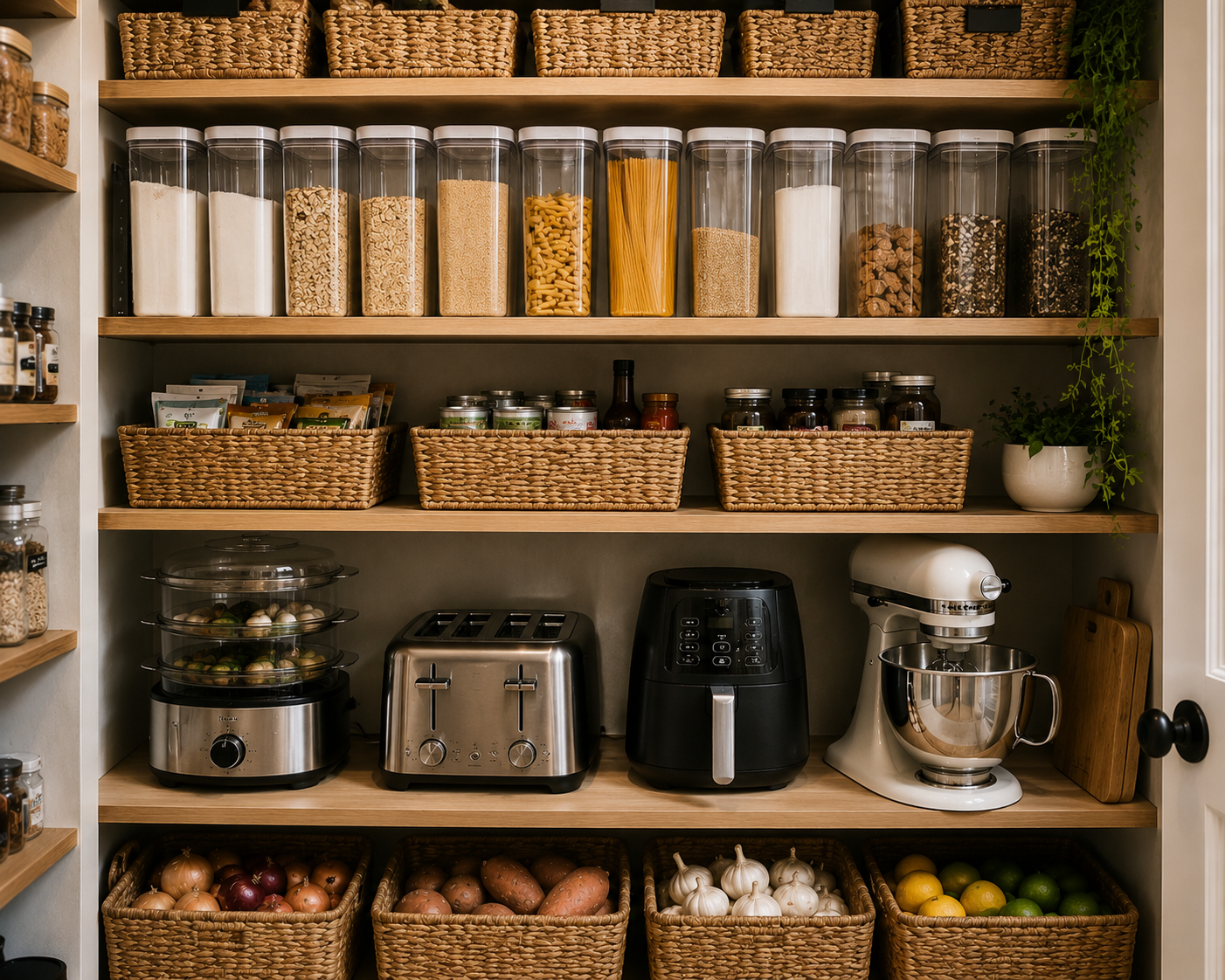
There is something deeply satisfying about opening a pantry door and being able to see exactly what is inside. The shelves do not need to look like a magazine spread. They simply need to help the space work better for the people who use it.
For a long time, I thought pantry organization was mostly about making things look neat. I imagined matching containers, perfect labels, and carefully arranged shelves that somehow stayed untouched after the photos were taken.
Real life is different. Groceries come in different shapes and sizes. Family members put things back in unexpected places. A busy week can quickly turn an organized shelf into a collection of half-open bags, forgotten cans, and ingredients we accidentally buy twice.
The goal of organizing a pantry is not perfection. The goal is to make life easier. When the space is arranged thoughtfully, you can find what you need, prepare meals more efficiently, and notice what should be used before it expires.
A More Peaceful Home
Our homes hold many of the routines that shape our days. When one frequently used space works well, the effects can reach far beyond the shelves themselves.
When ingredients have clear homes, you spend less time searching and less energy deciding where things belong. That small reduction in mental clutter can make cooking feel easier.
Visible ingredients are more likely to be used. Grouping similar foods together also makes it easier to notice duplicates and items that should be included in the next meal.
A clearly arranged pantry helps you gather ingredients quickly, which can make the difference between cooking dinner and ordering something at the last minute.
Small systems create a sense of steadiness. Opening an orderly pantry can make an ordinary task feel calmer and more manageable.
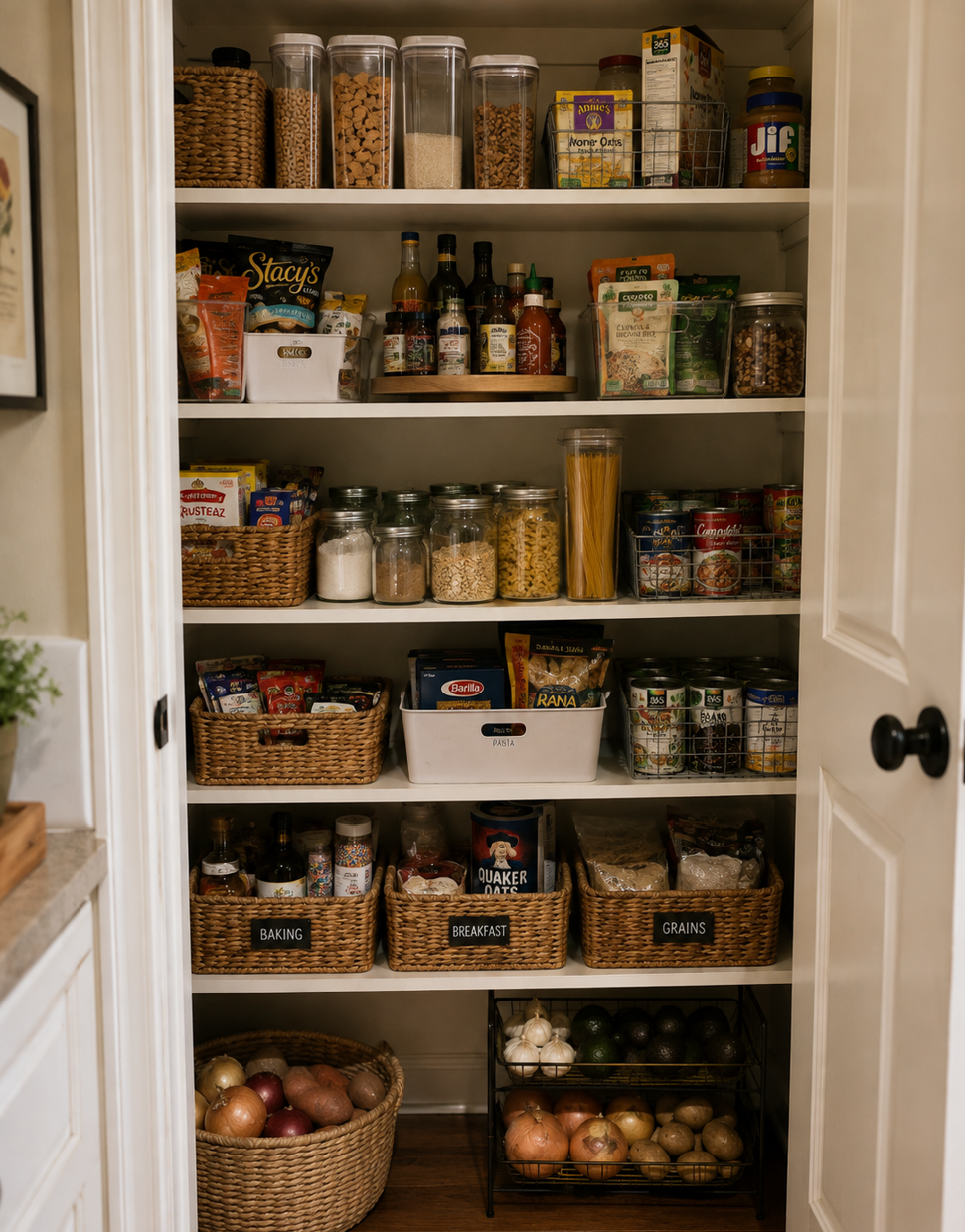
The most useful pantry is one that reflects the way you actually shop, cook, and live.
Begin with What You Have
Pantry organization often begins after a moment of frustration. Maybe you discover three open bags of the same ingredient. Maybe a jar falls from an overcrowded shelf. Maybe you realize that groceries are being forgotten because they disappear behind taller containers.
That moment can become an invitation to create something better. You do not need a complete renovation or a large shopping trip. In many cases, the most effective changes begin with clearing the shelves and taking an honest look at what you already own.
Remove everything from the pantry and place it on a table or counter. Discard expired food, combine duplicate packages when appropriate, and set aside unopened items your household is unlikely to use. Those may be good candidates for a local food bank, provided they meet the organization’s donation guidelines.
Once the shelves are empty, clean them thoroughly. This blank starting point gives you an opportunity to see the pantry differently. Instead of automatically returning every item to its old location, consider how often you use it and where it would be easiest to reach.
More Than Appearance
Cluttered spaces can quietly create frustration. Each time you search for an ingredient or move several items to reach something in the back, the pantry demands a little more attention.
Organization reduces that friction. It gives the eye a place to rest and helps everyday tasks follow a predictable pattern.
This does not mean every package must be transferred into a matching jar. Some foods are better kept in their original containers. The important question is whether the system is understandable and easy to maintain.
A Practical Reset
You do not need to organize everything at once. Work through the pantry one step at a time and build a system that feels natural.
Take everything off the shelves. Check expiration dates, wipe down containers, and decide what deserves space in the pantry.
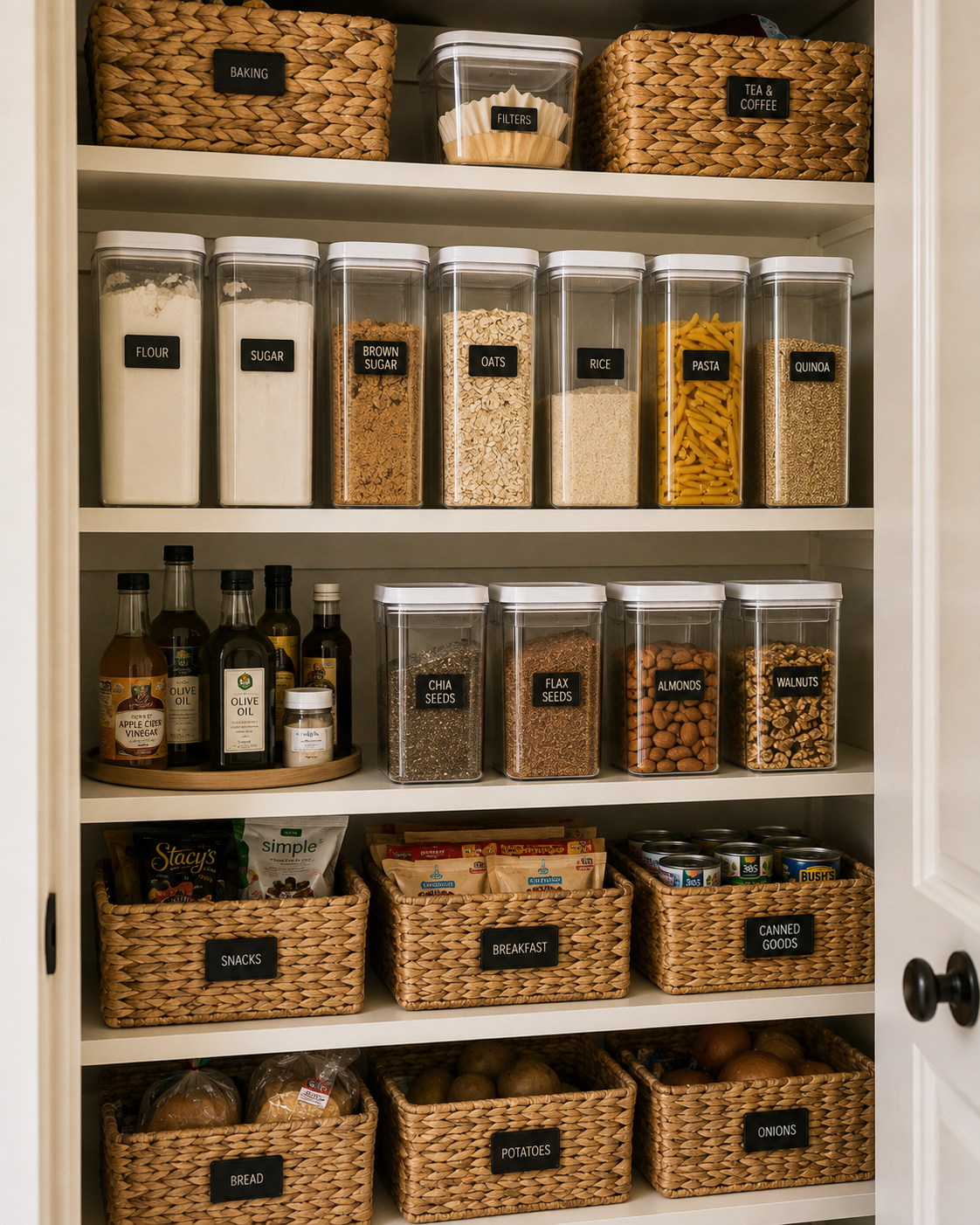
Group similar items together. Common categories include baking, breakfast, snacks, canned goods, grains, pasta, sauces, and quick meals.
Keep frequently used foods at eye level. Place lighter or less-used items higher and heavier products on lower shelves.
Clear bins and jars are useful when they improve visibility or keep packages contained. They are not necessary for every ingredient.
Simple labels help everyone understand the system. Use broad categories so the pantry can adapt when groceries change.
Avoid filling every inch. A little open space makes it easier to bring groceries home without immediately disrupting the system.
Organize by Routine
Zones help family members find ingredients and return them to the right place.
Oats, cereal, granola, nut butters, coffee, tea, and breakfast toppings.
Flour, sugar, baking powder, chocolate chips, extracts, and decorating supplies.
Pasta, rice, grains, canned tomatoes, beans, broths, and sauces.
Nuts, crackers, popcorn, dried fruit, bars, and grab-and-go items.
Extra ingredients and unopened packages that will replace everyday items as they are used.
Keep It Manageable
The best organizational system is one that can survive an ordinary week. It should not require perfect behavior or a full reset every time groceries come home.
Spend five minutes returning misplaced items, removing empty boxes, and moving anything that should be used soon toward the front.
Check the pantry before writing the grocery list. This reduces duplicate purchases and helps you plan meals around what you have.
Place new items behind older ones when possible. This simple habit encourages you to use food in the correct order.
Review the shelves more thoroughly and adjust the categories based on current cooking habits, holidays, or changes in your household.
A Simple Shopping Guide
Start by using containers and baskets you already own. Add new products only when they solve a specific problem in the space.
This section may contain affiliate links. I may earn a small commission at no additional cost to you when you make a purchase through one of these links.
A Space That Reflects You
Every pantry tells a little story about the people who live in the home. The ingredients reveal favorite meals, family traditions, health goals, busy schedules, and the recipes that bring everyone together.
Your pantry may hold baking supplies for weekend treats, quick dinners for demanding workdays, carefully chosen snacks, or ingredients used in recipes passed down through generations.
There is no single correct way to organize it. A household with young children will need a different system from someone who loves baking or someone who cooks primarily from scratch. The shelves should reflect the routines that already matter to you.
When the pantry supports those routines, organization becomes more than appearance. It becomes a form of care for your home and for the people who gather there.
A Kinder Kind of Order
An organized pantry will not solve every stressful part of life. It will not make every dinner effortless or prevent every busy week from becoming chaotic.
What it can do is remove a small amount of daily friction. It can make ingredients easier to find, grocery shopping more intentional, and meal preparation a little less overwhelming.
Begin with one shelf. Clear it, clean it, and give each item a sensible place. Then stop and notice how that small change feels.
You may discover that the real joy of an organized pantry is not the arrangement of the jars or the neat rows of baskets. It is the quiet relief of knowing that one corner of your home is working with you.
Begin Your Pantry Reset
You do not need to finish the entire pantry today. One small, useful change is enough to begin.
Review the Organization Steps