
Decluttering With Purpose: How Letting Go of Clutter Can Transform Your Life in Menopause
Decluttering in midlife is not just about making your home look better. It can be about creating space for the person you are becoming and releasing the things that belong to a season you have already outgrown.
There is a point in life when clutter starts to feel different.
Maybe the closet that once seemed manageable suddenly feels overwhelming. The kitchen cabinets are full, but somehow you still cannot find what you need. There are stacks waiting to be sorted, drawers filled with things you have not used in years, and sentimental belongings you feel guilty even considering letting go of.
During menopause and midlife, our relationship with our homes can shift. We may be adjusting to children becoming more independent, changing careers, reconsidering how we spend our time, caring for aging parents, preparing for retirement, or simply realizing that we no longer want to manage so much stuff.
That is why decluttering at this stage of life can be about much more than organization. It can become a way of deciding what deserves to come with you into your next chapter.
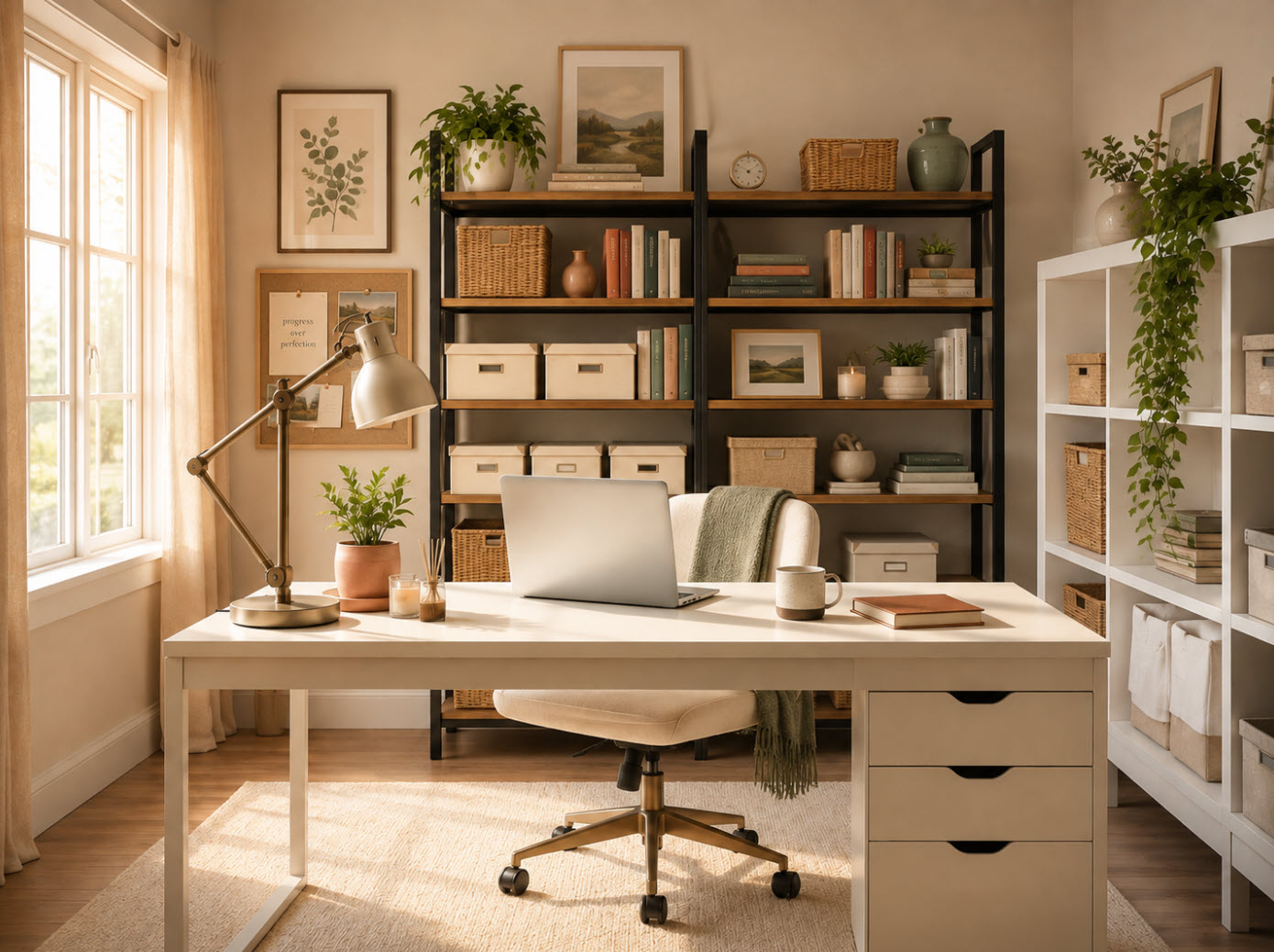
Why Clutter Hits Differently During Menopause and Midlife
Clutter is not automatically a problem. Most of us live full lives, and full lives create belongings. The trouble begins when the things we own require more energy than we want to give them.
Midlife can make this especially noticeable. Your attention may already be divided among work, family, health, finances, relationships and plans for the future. Having to constantly move, clean, organize and make decisions about unnecessary belongings becomes one more demand on your mental bandwidth.
Even visual clutter can create a sense that there is unfinished business everywhere you look. The chair covered in clothes becomes a task. The overflowing pantry becomes a task. The stack of papers on the counter becomes a task.
That small shift changes the goal. You are no longer trying to become better at storing everything. You are deciding what actually deserves space in your home and your life.
Understanding the Mental Blocks Behind Clutter
Most clutter is not created because we are lazy or incapable of organizing. Often there is an emotional reason behind what we keep.
“I spent money on it.”
Getting rid of something can feel like admitting the purchase was a mistake. But the money has already been spent whether the object stays in your closet for another five years or leaves today. Keeping something you do not use does not recover its cost.
“I might need it someday.”
Sometimes we keep things to protect ourselves from a future inconvenience. It helps to ask how difficult or expensive the item would actually be to replace. A specialty tool may deserve storage space. Fifteen empty food containers probably do not.
“Someone gave this to me.”
Gifts can become emotional obligations. But appreciating the person does not require permanently storing every object they have given you. You can value the memory without maintaining every physical reminder.
“This belonged to an earlier version of me.”
This one can be surprisingly powerful. Clothes from another stage of life, hobby supplies from something you no longer enjoy, old work materials and items connected to your children when they were younger can feel tied to identity.
You do not have to erase your past. But you also do not have to make your current home a storage facility for every version of your former life.
Decluttering as an Act of Intention
Intentional decluttering asks you to think beyond the object itself.
Instead of simply deciding whether something is useful, consider whether it supports the life you are trying to create.
- Does this make my daily life easier?
- Do I use it, enjoy it or genuinely value it?
- Would I buy this again today?
- Does keeping it create more work for me?
- Am I keeping it because I want it or because I feel guilty?
These questions are particularly useful in midlife because our priorities often change. A house that once needed to support young children may now need to support hobbies, travel, entertaining, working from home or simply having more quiet.
The Benefits of Mindful Decluttering
Decluttering will not solve every stressful thing happening in your life, but it can remove unnecessary friction from your everyday routines.
Fewer possessions can mean less time spent cleaning, sorting and searching. A simplified wardrobe can make mornings easier. A pantry filled with food you actually eat makes meal planning simpler. A clear kitchen counter makes it easier to cook. An organized office can make sitting down to work feel less daunting.
There can also be a financial benefit. Going through what you already own often reveals duplicate purchases and forgotten items. It can make you more aware of what you bring into the house going forward.
Most importantly, decluttering can create a feeling of movement. You are making decisions instead of postponing them.
A Personal Framework for Decluttering With Purpose
You do not need to empty your entire house onto the floor or spend a full weekend surrounded by donation bags. In fact, smaller sessions are often easier to maintain.
Start Small
Choose one drawer, one shelf, one bathroom cabinet or one section of a closet. Finishing a small area gives you a sense of progress without creating a bigger mess than the one you started with.
Use Four Categories
Sort items into four basic groups: keep, donate, sell and discard or recycle. Avoid creating a giant “decide later” category. That usually becomes clutter in a different location.
Make the Keep Pile Earn Its Space
You do not need a dramatic reason to keep something. You can keep items simply because you love them. But you should know why they are staying.
Remove Donations Quickly
A donation bag sitting in the hallway for three months is still clutter. Put donations in your vehicle or schedule the drop-off as soon as possible.
Be Selective About Selling
Selling can be worthwhile, particularly for clothing, furniture, collectibles and higher-value household items. But be realistic about your time. If an item will only earn a few dollars after photographing, listing, storing and shipping it, donating may give you more value in the form of reclaimed space.
The 20-Minute Decluttering Reset
If the entire house feels overwhelming, do only this today:
- Set a timer for 20 minutes.
- Choose one visible area.
- Throw away obvious trash.
- Remove anything that belongs somewhere else.
- Choose at least five things to donate.
- Stop when the timer ends.
You do not need to finish your house today. You only need to make today's space a little lighter than it was yesterday.
Room-by-Room Decluttering Guide
Kitchen
Start with expired food, duplicate utensils, excess mugs, unused appliances and food-storage containers without matching lids. Keep the items that make cooking easier and move rarely used pieces out of your prime storage areas.
Bedroom & Closet
Remove clothing that no longer fits your current lifestyle, shoes you avoid wearing and pieces you repeatedly pass over. Build your closet around what you actually reach for now.
Bathroom
Check expired products, old makeup, nearly empty bottles and beauty purchases you tried but never liked. Give everyday products the easiest-to-reach storage.
Home Office
Recycle outdated paperwork, remove duplicate supplies and create one place for papers that require action. Keep your primary workspace as visually clear as possible.
Living Areas
Focus on surfaces first. Coffee tables, side tables and shelves can quickly collect objects without a real home. Leave some intentional empty space instead of filling every available surface.
Sentimental Items
Save these for later in the process. Sentimental decisions require more energy. Consider keeping a curated collection rather than every item connected to the memory.
Essential Tools for Your Decluttering Journey
You do not need a collection of matching containers before you begin. In fact, buying organizers too early can simply create prettier clutter.
Start by reducing what you own. Then decide what storage would actually improve the space.
A few basics can make the process easier:
- Sturdy donation bags or boxes
- A permanent marker for labeling
- A small recycling bin or paper shredder
- Clear containers for categories that need visibility
- Baskets for items that naturally belong together
- A measuring tape before purchasing storage products
Maintaining the Gain: How to Keep Clutter From Coming Back
Decluttering is easier when it becomes part of normal life instead of something you wait to do during a major cleanout.
One useful habit is the one-in, one-out rule. When you buy a new sweater, consider whether another sweater can leave. The same can apply to kitchen tools, decor, books and beauty products.
Another helpful practice is keeping a donation basket somewhere convenient. When you notice something you no longer use, place it in the basket rather than putting it back into storage.
Pay attention to your shopping habits as well. Sometimes decluttering reveals that the real issue is not organization but what continues coming through the front door. Before buying something, ask yourself where it will live, how often you will use it and whether you already own something that serves the same purpose.
Finally, allow your home to evolve with you. What worked five or ten years ago may not be what you need today. Your home should support your current life, not require you to maintain systems designed for an earlier season.
Final Thoughts
There is something powerful about reaching a stage of life when you begin asking different questions.
Not “How much can I fit in here?” but “How much do I actually want to manage?”
Not “What if I need this someday?” but “Is keeping this helping me today?”
Not “Who was I when I bought this?” but “Who am I becoming now?”
Decluttering with purpose is not about creating a perfect home. Homes are meant to be lived in. There will always be laundry, dishes, projects and things temporarily out of place.
The goal is something simpler: creating a home where the things around you support rather than compete with the life you want to live.
Midlife already brings enough transitions of its own. Your home can become one place that feels calmer, lighter and more intentional.
You do not have to overhaul everything this weekend. Start with one drawer. One shelf. One bag headed for donation.
Then notice how it feels to have a little more room for what is ahead.